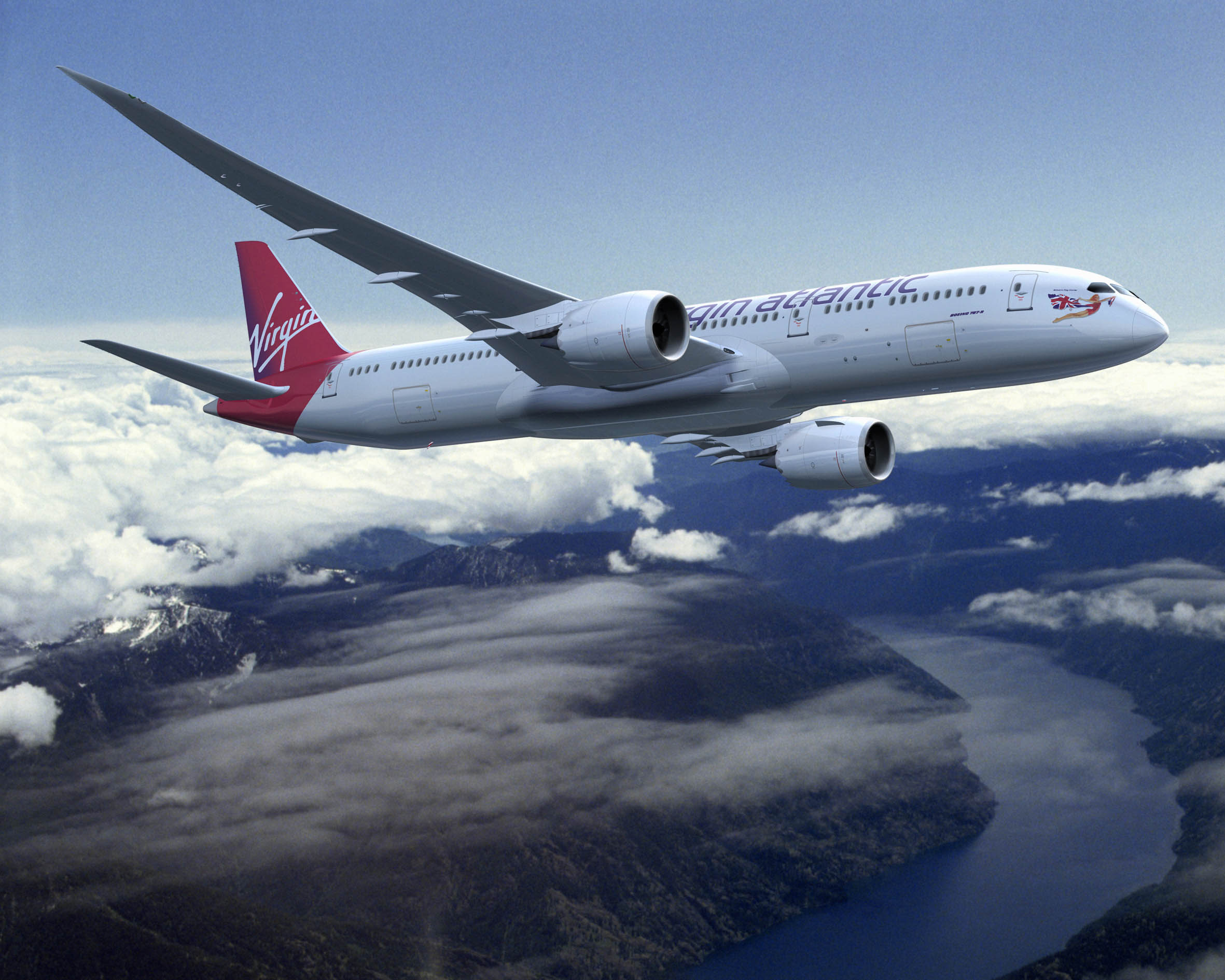
IT’S A KNOWN FACT that airlines have heavy-weighted carbon footprints that can walk all over and blacken a world that should be green.
Virgin Atlantic have announced they will be using the world’s first fuel that uses half the carbon footprint of the usual fossil fuel that is used by other airlines.
The airline joined forces with energy company LanzaTech to develop the fuel, which is a product of fermented and chemically converted waste gases from industrial steel production.
The gases would otherwise be burnt into the atmosphere as carbon dioxide.
Air travel is an essential aspect of today’s modern world, enabling us to reach parts of the world which would otherwise be impossible.
However, the unfortunate flip side is that it’s a major contributor to climate change because of the impact of greenhouse gases per passenger mile. Although the aviation industry makes claims that planes account for only around 1.5%–2% of global CO2 emissions, the Guardian reported that the figure is misleading.
Flying high
Firstly, most flights are taken in ‘developed’ countries. So the CO2 emissions caused by flying is higher – around 6.3% in the UK, according to Department for Transport figures for 2005 reported in the newspaper.
Also, the aviation industry as a whole – not just the aircrafts – causes greater damage to the environment through the processing and transportation of aviation fuel and the manufacture and maintenance of planes, airports and support vehicles.
In addition, the figures only take into account the carbon emissions from outbound flights from the UK and not the flight coming back. Therefore, half the blame is attributed to the country being travelled to.
The International Air Transport Association (IATA) claim that their vision is to achieve carbon neutral growth in the medium term and to build a plane that produces no emissions within 50 years.
In the meantime, this development by a leading airline in the industry is a positive step forward towards airlines becoming a greener mode of transport.
Roll out the green carpet
A ‘demo’ flight is planned within the next 12-18 months to test the fuel and it’s currently being piloted in New Zealand.
Virgin Atlantic will be working with LanzaTech, US plane-making company Boeing and Swedish Biofuels to ensure that the strategy will meet the technical requirements for using a new fuel in an aircraft.
Virgin Atlantic plan to use the fuel within 2-3 years on its routes from Shanghai and Delhi to London Heathrow. If successful, they will roll it out onto more routes.

In his announcement of the green initiative, Sir Richard Branson, president of Virgin Atlantic, said:
“With oil running out, it is important that new fuel solutions are sustainable, and with the steel industry alone able to deliver over 15 billion gallons of jet fuel annually, the potential is very exciting. This new technology is scalable, sustainable and can be commercially produced at a cost comparable to conventional jet fuel.”
Hopefully, other airlines will begin to follow in his (carbon) footsteps.
– Monica Sarkar
Follow me for notifications on more posts – enter your e-mail address on the right  →
→


 Monica Sarkar
Leave a reply to londonliaison Cancel reply